
Pule Donkey Cheese Nutrition Facts

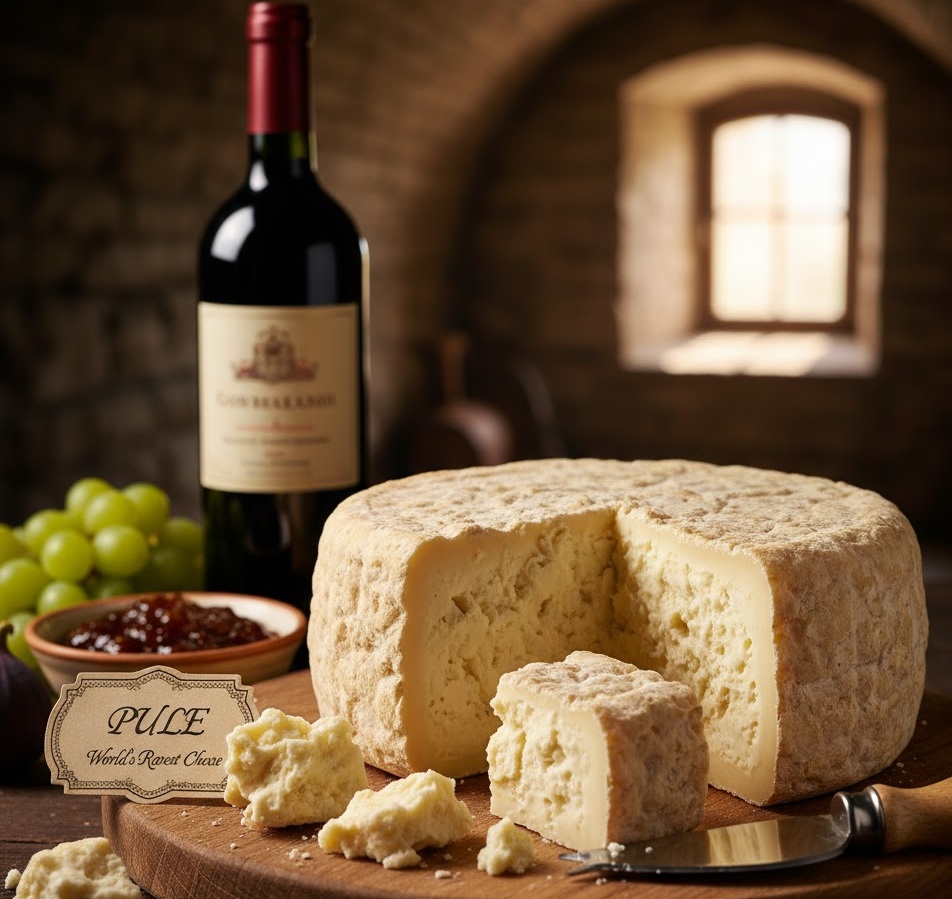
Pule Donkey Cheese Nutrition Facts
Pule, often called the world’s most expensive cheese, is primarily made from Balkan donkey milk, often blended with goat’s milk (typically 60% donkey, 40% goat for the cheese from the Zasavica Nature Reserve in Serbia).
Due to its rarity and small-scale production, standardized nutritional facts can be difficult to find, but the information available highlights several key aspects, largely derived from the unique composition of donkey milk:
Pule Donkey Cheese Nutritional Highlights (per 100g)
| Nutrient | Typical Values (from one specific manufacturer of a similar donkey milk cheese blend) | Key Characteristics of Pule/Donkey Milk |
| Energy | Approx. 1635 Kcal | Varies by blend and curing. |
| Fat | Approx. 33 g | Donkey milk itself is very low in fat (around 1% fat in the milk, much lower than cow or goat milk). The fat content in the cheese is influenced by the processing and the addition of goat’s milk. |
| Saturated Fat | Approx. 23 g | |
| Protein | Approx. 23 g | High in protein, including healthy whey proteins. |
| Calcium | Approx. 700 mg | Pule cheese is high in calcium |
| Carbohydrate | Approx. 0.1 g | Very low in carbs/sugars (as with most cheeses). |
| Sugars | Approx. 0.1 g |
Comments
Related Posts

Johns Hopkins University List of Covid19 Variants : An image circulating across social media platforms purportedly shows a list of Covid Variants and their date of emerging. The covid19 variant list is claimed to have been composed by the Johns Hopkins University. However so far neither an official statement by...

Is Rejuran Treatment Painful? Find your answer in this detailed blogpost. Yes, the Rejuran treatment involves some level of discomfort and can be painful, but it is generally considered tolerable for most people. The pain is often described as a sharp, stinging or burning sensation that subsides quickly. Topical Numbing Cream...

Stomach Paralysis as Ozempic Side Effect : Does Ozempic cause stomach paralysis ? According to a report recently published by FDA (Food and Drug Administration), complaints regarding severe stomach paralysis as ozempic side effect have risen to critical numbers. Ozempic is a medication used to treat type 2 diabetes. It...

Does Tylenol Use by Pregnant Women Cause Autism? At a press conference, former President Donald Trump and Health Secretary Robert F. Kennedy Jr. made a striking claim, warning pregnant women against using the common pain reliever Tylenol. Trump stated that women who use acetaminophen, the active ingredient in Tylenol, during...

Laser therapy (treatment) to quit smoking : Are you looking for a good laser thepary service in Germany , especially cities like Duisburg, Frankfurt and Stuttgart ? To stop smoking immediately, this addiction needs to be treated with the right treatment method. Having recorded an unusual success rate as high...

Beetroot juice recipe to lower high blood pressure: Researches conducted by The British Heart Foundation (BHF) suggest that consuming beetroot juice regularly may help lower high blood pressure in emergency situation (See: foods that lower high blood pressure). However, there are confusion regarding how to prepare beetroot juice for the...